



When I discuss with New Zealand players about securing their online casino experience, I always lead with the security settings inside their Rocket Casino account rocketcasinoo.com. It’s tempting to jump straight to the games and the welcome bonus, but the true foundation for safe play is found in the account dashboard. I’ve navigated this setup with many users, and one thing stands out: every layer of protection—from the sign‑up form to the two‑factor authentication toggle—is designed to give you command while fulfilling the rigorous standards that New Zealand financial institutions and gambling regulators demand. In the sections ahead, I’ll take you through how your account is created, how identity verification operates, which security features you can activate, and how to recover access when things don’t go to plan. My goal is to give you a full picture of the tools you possess, so you can appreciate the games with certainty, knowing your money and personal data are protected at every step.
Safeguarding Your Login: Password Best Practices and Two‑Factor Authentication
Even the strongest password can be exposed if you repeat it across other services, so I put a lot of emphasis on pairing a unique Rocket Casino password with a second authentication factor. After you log in, head to the “Security” tab in your account area to access the two‑factor authentication settings. Rocket Casino provides time‑based one‑time passwords through well-known authenticator apps like Google Authenticator, Authy, or Microsoft Authenticator. When you switch this on, the system presents a QR code that you capture with your chosen app. Right away, the app begins generating a new six‑digit code every thirty seconds, and you’ll need to enter that code each time you log in from a new device or browser. I urge you to complete the setup by recording the set of backup recovery codes the casino gives you. Those codes are your safety net if you lose your phone. I suggest storing them in a password manager, or scribbling them on paper and storing them somewhere safe, away from your device.
Without two‑factor authentication, anyone who obtains hold of your email and password could potentially access your Rocket Casino account. With it flipped on, an extra, constantly changing credential lies between an intruder and your funds. I’ve observed some players resist turning it on because they worry it’ll slow down their login routine. In practice, once your trusted devices are recognized for a set number of days, you’ll only need to enter the second factor occasionally. The few seconds it takes are a tiny price for the peace of mind it provides. Also, the authenticator app operates offline, so you don’t require mobile reception to generate a code—handy if you compete from a tablet on a Wi‑Fi‑only connection. I also inform players that SMS‑based codes are better than nothing, but they can be susceptible to SIM‑swap attacks. The authenticator app is the stronger choice, and it’s the level of security I believe every New Zealand player should anticipate from an online casino handling real money.
Identity Verification: The KYC Process for New Zealand Users
New Zealand requirements and international anti‑money laundering norms mean Rocket Casino must complete a Know Your Customer (KYC) review before any real‑money withdrawal goes through. I inform players this doesn’t have to be a hassle—it’s a protection that stops anyone else from cashing out your winnings. The verification may kick in automatically after your first deposit, or it may be asked for before you hit a certain total withdrawal amount. You’ll typically see a notification in your account dashboard and get an email with a link to a secure document upload portal. I’ve helped enough users to know that having the right documents ready in digital form keeps the whole thing smooth. You’ll have to provide a clear, colour copy of a current government‑issued photo ID. The system supports a range of options that Kiwis will identify, so pick whichever one you have handy.
- NZ driver licence – front and back, showing all four corners, without glare on the photo or text.
- New Zealand passport – the two‑page spread with your photo and personal details, machine‑readable zone clearly legible.
- Overseas passport – accepted if it’s current and you pair it with proof of your New Zealand address.
- Evidence of address – an up‑to‑date utility bill, bank account statement, or a government‑issued letter from the last three months, with your full name and residential address.
- Payment method proof – if you made a deposit with a credit or debit card, you might need to send a photo of the card with only the first six and last four digits visible, with the CVV covered.
I always advise Kiwi users that the verification team works around the clock, but the number of submissions can impact how quickly your documents get reviewed. In my experience, most straightforward cases clear within one to two days, though busy public holiday periods can add a little extra time. The key is to upload images that are clear, not cropped, and free of shadows or reflections. If an image fails the automated checks, you’ll get an email explaining exactly what to fix, and you can resubmit without any penalty. Once your identity is confirmed, the dashboard shows a verified badge, and that status unlocks unrestricted withdrawals. I also recommend keeping your proof‑of‑address document no older than ninety days—an expired utility bill is the most common reason for verification delays among the players I help. The whole process runs inside a TLS‑encrypted upload page, so your sensitive files are transmitted securely and stored in line with data protection rules.
Recovering a Misplaced or Forgotten Password with Account Retrieval
Forgetting your password is a common frustration, but Rocket Casino has a retrieval path that keeps your account secure while helping you back to the games fast. On the login screen, I guide players to the “Forgot Password?” link just below the password field. Click it, and a short form appears where you enter the email tied to your account. Once you send, the system generates a single‑use password reset link and forwards it to that email. The link stays valid for a limited window—usually thirty minutes—after which it becomes invalid and you’ll have to request a new one. That time limit lowers the risk of an old reset link being misused if someone later gains into your email. When you open the link, you arrive on a secure page where you can choose a brand‑new password. I always recommend choosing a completely new combination, not a version of the old one, and saving it straight away in your password manager.
Sometimes the reset email doesn’t show up because it’s gone in a spam folder, or because the email address you input doesn’t match with the one on file. I suggest searching your inbox for all messages from Rocket Casino and including the sender to your contacts to block future filtering. If account recovery grows more complicated—say, you’ve forgotten access to the registered email account or you no longer possess the authenticator app with your two‑factor codes—support is your next step. You’ll have to prove your identity through other means. The support team might present a series of security questions that correspond with your original registration details, or they may ask for a copy of your photo ID and a recent proof of address, even if you’ve already been verified. The backup recovery codes I referenced earlier are priceless here; one of those codes can supersede the two‑factor prompt and let you regain control of your account. I cannot highlight enough that recovery codes should be regarded like cash—anyone who possesses them has the keys to your account.
Common Login Problems and Possible Solutions for NZ Users
Even with meticulous planning, login problems can occur. I’ve listed the issues I frequently help New Zealand players fix, and I’ve noted that a step-by-step check fixes the great majority without having to contact support. The initial and most frequent cause is a simple credential mismatch—a mistyped email address or a password that’s been changed but not changed in the browser’s saved logins. I always recommend typing your email into a plain text editor beforehand, then pasting it into the field to exclude hidden characters. The next big category involves the web browser directly. A build‑up of cached files and cookies can affect the login script, leading to the page loop back to the login screen even after you enter the right credentials. Removing the cache for the Rocket Casino domain, or doing a full browser data clear, often solves this in under a minute.
Gamers using dual‑factor authentication can face code mismatches when the time setting on their authenticator app drifts out of sync. Most apps have a built‑in time correction function; running that is more efficient than waiting blindly. If you’ve just switched phones and didn’t transfer your authenticator app correctly, the codes will differ, and you’ll have to use a backup recovery code to sign in, then set up again the new device. Another case I encounter involves network‑based limitations. Some New Zealand workplaces and public Wi‑Fi networks restrict gambling‑related domains or slow down secure connections. Moving from Wi‑Fi to mobile data, or employing a different DNS server, can quickly determine whether the network is the culprit. VPNs come with their own issues: while a VPN with a New Zealand exit node is usually permitted, connecting from a server in a restricted jurisdiction may cause a regional block. If you encounter a message about geographical restrictions, disabling the VPN or picking a local node typically resolves the issue.
- Invalid email or password – check Caps Lock, keyboard language, and attempt a manual reset if needed.
- Browser cache and cookies – clear site‑specific data or try an incognito window to test access.
- Two‑factor code problem – synchronize the authenticator app’s time, make sure you’re using the right code, or use a backup recovery code.
- Network or ISP blockage – deactivate your VPN if you’re connected from outside NZ, or move from Wi‑Fi to mobile data to bypass a restrictive firewall.
- Account lockout from repeated failures – wait the cool‑down period, then follow the password reset link to create a new password before trying again.
- Email verification pending – ensure you’ve clicked the original verification email; if it’s expired, request a new one from account settings.
I’ve witnessed players get anxious when a login screen won’t validate their details, but these six checks almost always provide the answer. In the uncommon event that none of them succeeds, Rocket Casino’s customer support team—reachable via live chat or email—can review account logs and check if a security flag has been placed on the account. I tell users that the support agent will never ask for your password, only for identifying information that aligns with your verified profile. Being prepared with your account email, the date of your last successful login, and a photo of your ID if needed will accelerate things up. With those tools at your command, a login obstacle becomes nothing more than a minor deviation on the way to a secure and enjoyable session.
Setting Up Your Rocket Casino Account: Getting Started
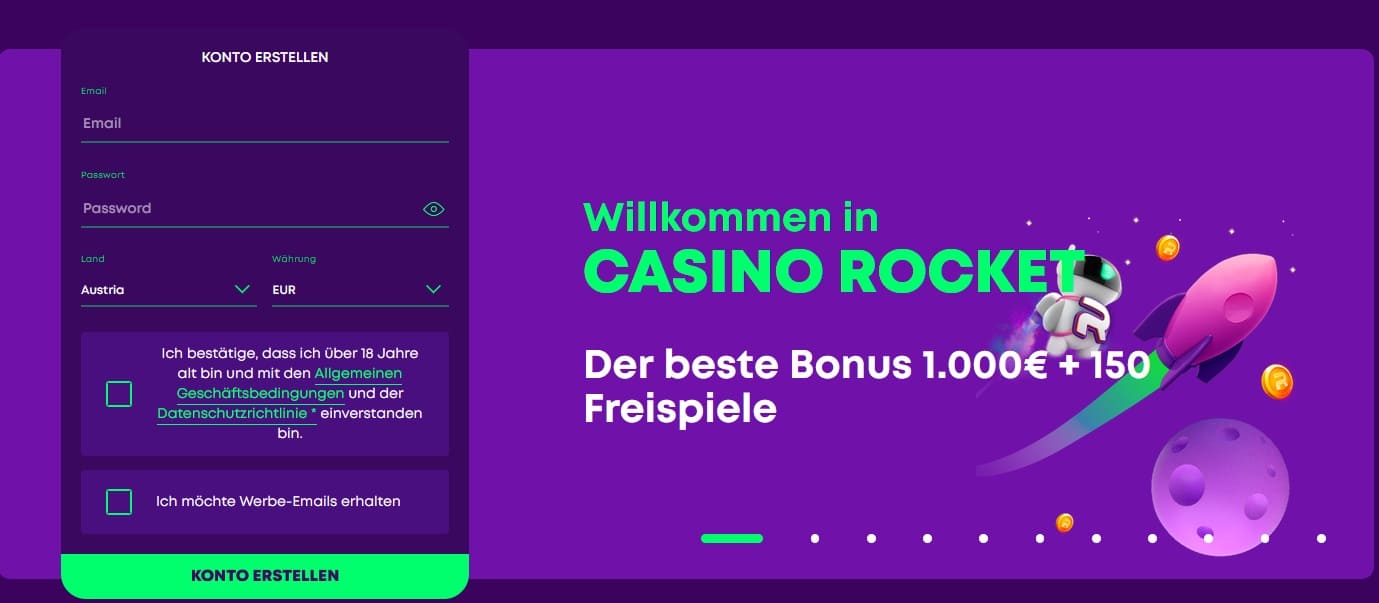
Registration kicks off with a screen that prompts for the details that will establish your account’s identity. I instruct players to treat this step like a banking application—the info you enter will later be checked against official ID documents during verification. You’ll need your full legal name, a valid email address, your date of birth, a physical residential address in New skysports.com Zealand, and a mobile phone number. The system also asks you to pick a currency. I always choose New Zealand dollars; it bypasses conversion fees and renders deposit limits clearer. Next, you’ll establish a password. I suggest a unique mix of at least twelve characters—uppercase, lowercase, numbers, and symbols—and never repeat a password from another site. After you accept the terms and acknowledge you’re at least twenty years old (New Zealand’s legal casino gambling age), the platform dispatches a verification link to your email.
Selecting that link is a crucial security checkpoint. Until you verify your email, your account continues in a provisional state and most withdrawal functions are locked. I’ve seen players miss this step and then question why they can’t use certain features, so I urge you to review your inbox right away—spam and promotions folders included. The confirmation email contains a one‑time link that runs out after a few hours, so move promptly. Once you click it, the system flags your email as verified and you can sign in fully. At that point, I propose heading to the account settings and filling in any missing profile details, like a middle name or your preferred language. A complete profile accelerates the later identity check and cuts down the chance of deposit holds. Bear in mind, every piece of data you input at registration gets cross‑referenced later, so accuracy doesn’t represent just a formality—it’s a security measure that stops your account from being mistakenly flagged.
Navigating the Login Page: Complete Access
When you’re ready to play, you end up on the Rocket Casino login screen, by using the main website or by bookmarking the dedicated page. I always verify that the address bar shows a valid TLS certificate—the padlock icon—before I enter any credentials. The login form is straightforward: one field for your registered email or username, and a second for your password. Below the fields, there’s usually a “Remember me” checkbox. I suggest leaving it unchecked on a shared or public computer, but turning it on for your own secure devices saves time. If you employ a password manager, verify it auto‑fills only on the genuine Rocket Casino domain, so you won’t mistakenly hand your details to a fake copycat site. Once you enter the correct credentials, the system gives immediate access or, if you activated two‑factor authentication, presents the secondary prompt for your authenticator code.
After a proper login, the portal leads you to the lobby, where your account balance and any active promos are displayed straight away. I recommend that the first thing you do is confirm that the session timestamp and the “last login” details align with what you anticipate. Rocket Casino logs geographical information tied to your IP address, so if you notice a login from a location you are unfamiliar with, it serves as an early warning. The platform may also send an automated email alert for a new device or an unusual sign‑in attempt. For mobile players, the login page adapts to smaller screens without losing any functionality, and the same security filters are enforced whether you are playing on an Android browser or an iOS device. If you mistype your password too many times, a temporary lockout kicks in to block brute‑force attempts, usually lasting fifteen to thirty minutes. That is a protective measure. I tell players who hit it to sit through the cool‑down, then recheck Caps Lock and their keyboard language before attempting again.
Understanding Session Management and System Logouts
Session management is the silent security layer that works in the background while you play. After you log in to Rocket Casino, the server creates a session token that verifies you, and that token sits in your browser. To narrow the window for someone to hijack your session, the platform enforces an automatic logout after a period of inactivity. From what I’ve observed across similar licensed casinos, this idle timeout commonly falls between fifteen and thirty minutes. If you walk away from your computer without closing the browser tab, the session ends and the next person who sits down will see the login screen, not your account balance. I always advise manually logging out when you finish a playing session, especially on a mobile device that could be lost or borrowed. The logout button is normally in the account menu, and clicking it removes the session token on your device and on the server, leaving no trace.
For players who transition between a desktop at home, a laptop at work, and a mobile phone, I suggest checking the active sessions page if Rocket Casino offers one inside the security settings. That view lists all devices currently logged into your account and their approximate locations. You can terminate any session you don’t identify with a single click. I see this as an essential step if you ever spot unusual activity, or if you’ve accidentally left yourself logged in on a device you no longer own. The platform may also automatically log you out when it detects a big change in your IP address or geographic location—that serves as a tripwire against unauthorised access. While this can be a minor inconvenience if you’re travelling within New Zealand, it verifies that the system is actively watching session integrity. Pairing session awareness with the notification alerts for new logins creates a tight feedback loop that lets you act before any harm can happen.